
Electrolytic capacitor paper may look like a simple separator, but it strongly influences manufacturing stability and long-term performance. The right choice starts with understanding what the paper does inside the capacitor, then matching paper properties to your design, electrolyte system, and voltage class. This guide walks through a clear, procurement-friendly way to evaluate options and speak with suppliers using the same technical language.
What electrolytic capacitor paper does inside a capacitor?
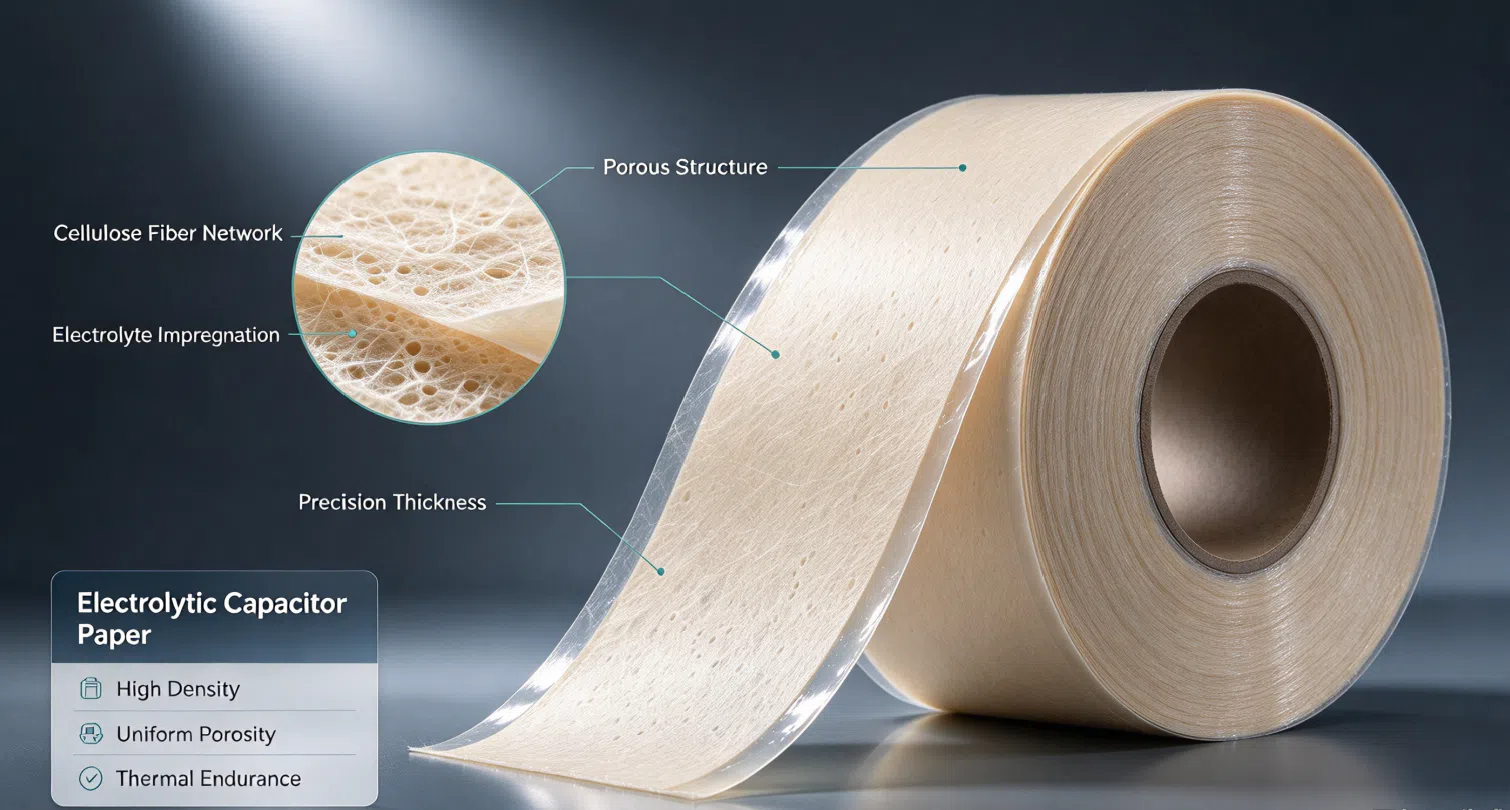
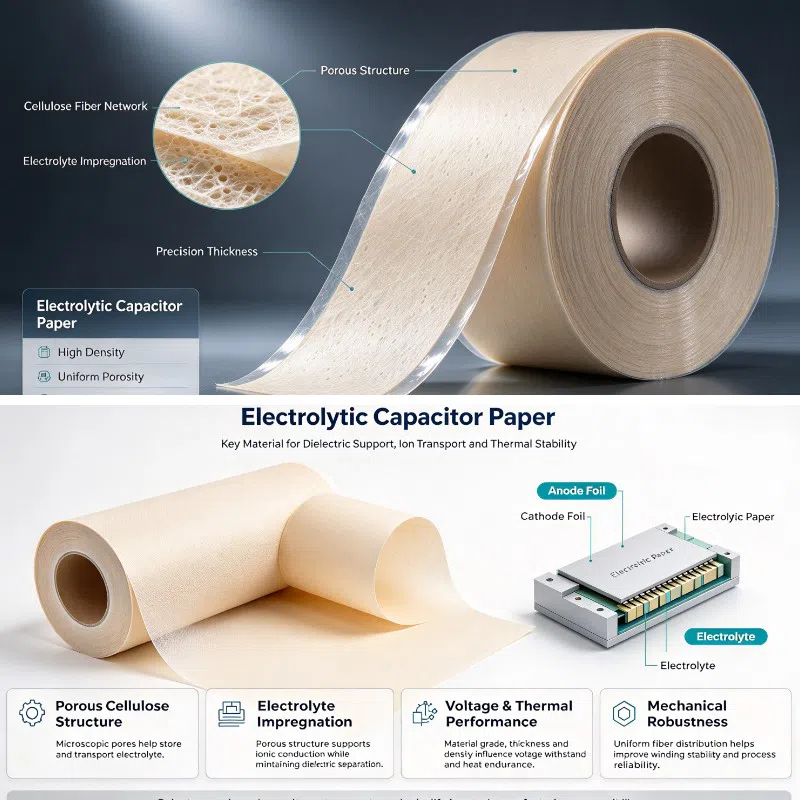
In conventional aluminum electrolytic capacitor structures, electrolytic capacitor paper is placed between electrode foils. Instead of acting as the primary dielectric, it functions as a separator that supports consistent operation by physically isolating foils and holding electrolyte within the element.
In practice, buyers often hear multiple names for the same material. Electrolytic capacitor separator paper is a common term used to emphasize its role in separating the electrodes while remaining saturated with electrolyte during operation.
The three functions procurement teams should keep in mind.
When evaluating electrolytic capacitor paper for purchasing or qualification, it helps to tie supplier conversations back to three practical functions:
1.Physical separation: the paper maintains separation between electrode foils to reduce the risk of direct contact.
2.Electrolyte absorption and retention: the paper absorbs and holds electrolyte within its pore structure.
3.Support for electrical performance: by combining stable structure with electrolyte compatibility, the separator contributes to reliable capacitor behavior.
These are simple statements, but they are also a useful checklist: if a paper grade compromises one function for another, the overall design may need adjustment. Procurement teams that keep these three functions in view usually have more productive supplier discussions because they can connect laboratory properties to process behavior, winding stability, and long-term field expectations rather than reviewing single test items in isolation.
Key properties to evaluate before selecting a grade.
A practical selection discussion typically includes the following paper characteristics, reviewed together rather than one by one:
·Thickness: affects winding or stacking design and overall element dimensions.
·Porosity: relates to internal pore structure and influences electrolyte uptake.
·Electrolyte absorption: describes how effectively the separator takes up and holds electrolyte.
·Mechanical strength: impacts converting, winding, and general handling during manufacturing.
·Material consistency: supports stable processing and predictable product quality.
A common mistake is assuming that thicker is always safer. Thickness can be appropriate or inappropriate depending on the capacitor design, so it should be confirmed against finished construction requirements, process limits, and the way the separator behaves with the intended electrolyte system.
Choosing paper by voltage class.
Many buyers prefer to begin with voltage class, then narrow down by construction needs and operating conditions. In that workflow, Lunan New Material groups its portfolio into low-, medium-, and high-voltage categories, starting from the overall Electrolytic Capacitor Paper range.
Low-voltage electrolytic capacitor paper.
Low-voltage designs often focus on matching separator thickness and absorption behavior to the intended construction and electrolyte approach. For initial screening, buyers typically start with the Low-Voltage Electrolytic Capacitor Paper category and then confirm the specific grade with application testing.
Medium-voltage electrolytic capacitor paper.
Medium-voltage selection typically requires closer coordination between separator structure and operating conditions. Buyers comparing alternatives commonly discuss retention behavior, mechanical integrity in processing, and overall compatibility with the design. Reference products are organized under Medium-Voltage Electrolytic Capacitor Paper.
High-voltage electrolytic capacitor paper.
High-voltage capacitor designs tend to place more emphasis on stable separation and consistent material quality, because margins become tighter as electrical requirements rise. Lunan New Material lists relevant options under High-Voltage Electrolytic Capacitor Paper to support early-stage selection discussions.
A short selection checklist that reduces back-and-forth.
·Confirm the voltage class for the capacitor design.
·Define the construction constraints, including target thickness range, winding behavior, and dimensional limits.
·Clarify the electrolyte approach and request supplier guidance on compatibility testing expectations.
·Identify which paper properties are critical-to-quality, such as thickness control, absorption consistency, and mechanical handling.
·Request documentation needed for internal qualification, including specifications, consistency expectations, and change-control communication.
·Run application testing under intended operating conditions before final approval.
Used this way, the checklist becomes a shared language between engineering, purchasing, and an electrolytic capacitor paper supplier.
What to look for in an electrolytic capacitor paper manufacturer?
Beyond the sheet itself, many procurement teams also evaluate the manufacturer’s ability to produce specialty paper consistently and manage quality systems over time.
Shandong Lunan New Material Co., Ltd. describes its electrolytic capacitor paper as developed for applications requiring reliable insulation, electrolyte absorption, and electrical performance, and positions its specialty paper strategy around R&D, technology, quality, and sustainability. The company also states its management systems have obtained certifications covering quality management, environmental management, occupational health and safety, and intellectual property management on the About Us page.
Next steps for buyers.
If you are qualifying electrolytic capacitor paper for a new design or re-validating a current source, start by shortlisting by voltage class, then confirm the property set of thickness, porosity, absorption, mechanical strength, and consistency that matters most for your process.
For product pages and inquiry options, visit Contact Us at www.lunannewmaterial.com.
FAQs
Q1:What is electrolytic capacitor paper used for?
A1:It is used inside electrolytic capacitors to separate electrode foils and to absorb and retain electrolyte within the capacitor element.
Q2:Is electrolytic capacitor paper the dielectric in an aluminum electrolytic capacitor?
A2:No. In aluminum electrolytic capacitors, the dielectric is the oxide film on the anode; the paper serves as a separator and electrolyte holder.
Q3:How do I choose between low-, medium-, and high-voltage electrolytic capacitor paper?
A3:Start with the intended voltage class for your design, then evaluate paper thickness, absorption and retention behavior, mechanical handling needs, and consistency through application testing.
Q4:Which paper properties should be checked first during sourcing?
A4:Common first checks include thickness, porosity, electrolyte absorption, mechanical strength, and consistency, reviewed together to match the capacitor construction.
Q5:What should I evaluate when selecting an electrolytic capacitor paper manufacturer?
A5:Typical considerations include product category coverage, quality management approach, manufacturing consistency, and the supplier’s ability to support qualification discussions.
References
1.Nichicon Corporation. (n.d.). General description of aluminum electrolytic capacitors.
2.Cornell Dubilier. (n.d.). Aluminum electrolytic capacitor application guide.
3.Gurevich, V. I. (2012). Electrolytic capacitors: Design features and problems of the choice.
4.Wikipedia contributors. (n.d.). Electrolytic capacitor.


