
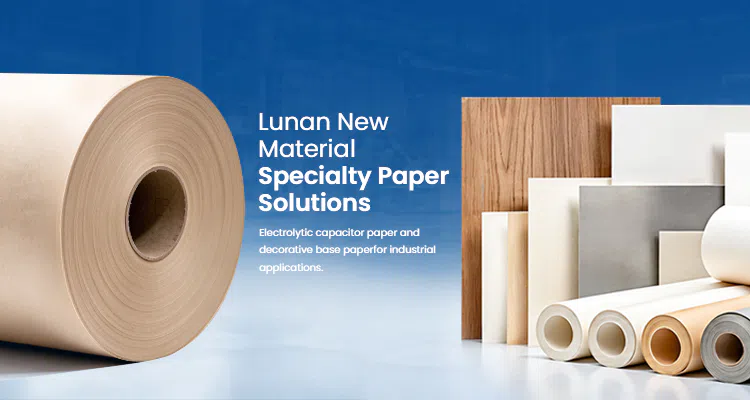

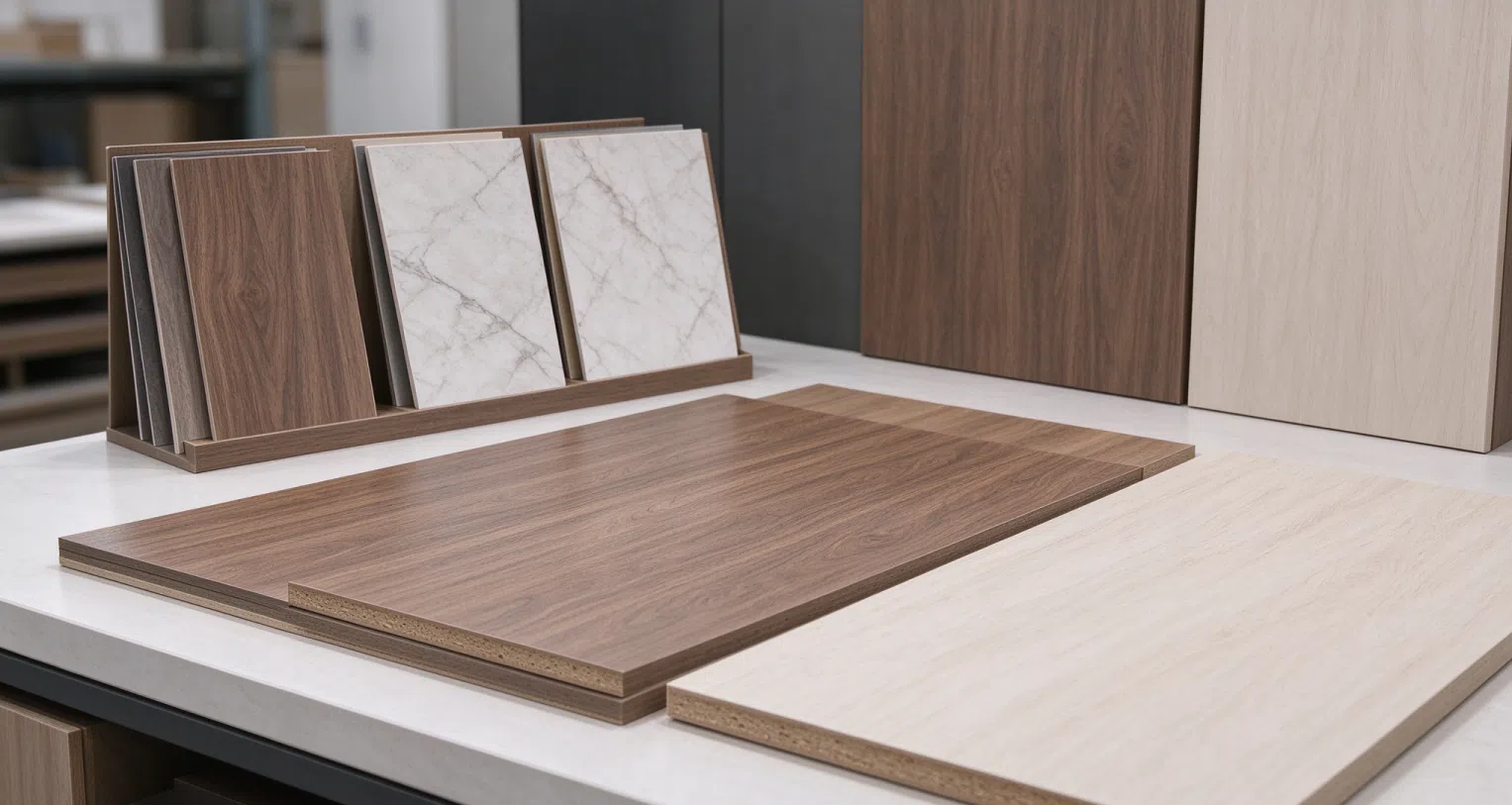
Decorative paper supplier switching often starts with a better quote—but it rarely ends there. For panel, flooring, and furniture manufacturers, the real cost of decorative paper supplier switching is usually hidden in re-approval loops: color alignment, impregnation trials, hot-press stability checks, and repeated internal sign-offs. In practice, the fastest way to shorten an approval cycle is to define decorative paper product positioning first, then evaluate suppliers inside the correct category.
Why decorative paper supplier switching is not a simple price comparison?
A unit-price reduction can be outweighed by avoidable disruptions when the incoming decorative paper behaves differently on the line. Buyers typically feel the impact in three places:
Appearance alignment: even small shade differences can force additional sampling and re-confirmation.
Process fit: printing, melamine impregnation, and hot pressing are sensitive to base-paper uniformity and dimensional behavior.
Yield stability: when runnability changes, waste and downtime rise—turning “savings” into rework.
That is why experienced teams treat decorative paper supplier switching as a spec-first decision, not a quote-first decision.
Define decorative paper product positioning before you request samples
Unclear decorative paper product positioning is one of the most common reasons a supplier change drags on. In this product family, “paper is paper” is a costly assumption—each grade is designed around a different performance target.
A supplier’s portfolio in this segment is commonly organized into five categories, each with distinct positioning:
Category | Grammage (g/m²) | Typical positioning |
|---|---|---|
60–120 | Facing paper for minimalist and modern solid-color boards | |
Printed paper | 60–120 | Base paper for woodgrain/stone/texture printing |
Same-color paper | 100–120 | Paired paper for premium double-sided visible panels |
80–200 | Industrial/vintage style decorative surfaces requiring higher toughness | |
Balancing paper | 50–120 | Backing paper to balance stress and support long-term flatness |

When decorative paper product positioning is set correctly at the start, decorative paper supplier switching becomes a focused verification task rather than an open-ended comparison.
What to check in each paper type to avoid re-approval?
Solid color paper for stable, clean surfaces.
Solid color paper is positioned as a core facing material produced without printing, emphasizing a clean, uniform color surface and suitability for melamine impregnation and high-temperature hot pressing. Common specifications include 60–120 g/m² and 1250–1860 mm width (customization may be available). Color options can cover 100+ shades across white, gray, red, yellow, orange, green, blue, purple, and black.
For decorative paper supplier switching, the approval risk often sits in shade repeatability and line stability—so product positioning should lock whether the target is ultra-high hiding power at lower grammage, or broader color matching across collections.
Printed paper for gravure and digital printing consistency.
Printed paper is positioned as a decorative base paper for woodgrain, stone, fabric, and artistic textures, designed for gravure rotary printing and digital inkjet printing. Typical specs include 60–120 g/m² and 1250–1860 mm width, with base shades such as white, gray, yellow, brown, dark brown, and black.
During decorative paper supplier switching, printed paper should be evaluated as a system: base-paper uniformity, print clarity expectations, and whether the paper’s stability holds through printing, impregnation, and pressing without shape distortion.
Same-color paper for premium double-sided visible panels.
Same-color paper is positioned for high-end double-sided decorative boards, aiming for 1:1 front–back pairing so the two sides match in pattern, color, gloss, tension, and dimensional behavior. Typical specs include 100–120 g/m² and a standard width around 1250 mm (custom widths may be supported).
For approval teams, the key is not to substitute it with general backing material. Same-color paper is meant to solve double-sided appearance mismatch and stress-imbalance issues by design, which can simplify the approval path when double-sided visibility is part of the product definition.
Kraft paper for industrial and vintage aesthetics with toughness.
Kraft paper is positioned for industrial and retro-inspired decorative applications. It is commonly made from virgin long-fiber wood pulp to deliver higher toughness and a natural look. Typical specs include 80–200 g/m² and 1250–1860 mm width (customization may be available), with shades such as light, medium, and dark kraft plus vintage brown and wood-coffee tones.
In decorative paper supplier switching, kraft paper should be positioned based on the intended aesthetic and handling needs—especially where cutting, edging, and pressing robustness matter.
Balancing paper to control stress and flatness.
Balancing paper is positioned as a backing base paper used with facing decorative layers to balance stress between board surfaces and reduce risks like warping, bending, crowning, or deformation. Typical specs include 50–120 g/m², 1250 mm width, and colors such as light yellow, off-white, and light gray.
Because balancing paper serves a different function than facing paper, balancing paper supplier evaluation should be separated from decorative facing comparisons. Clear positioning here can prevent approvals from stalling due to mismatched evaluation criteria.
Documentation expectations during decorative paper supplier switching.
Across these five categories, a key sourcing point is traceability: the full range can hold FSC Mix70/30 (FSC30) chain-of-custody certification. This supports certified material sourcing and tracking during procurement and audits. Many buyers still run their own performance and board-level verification—so aligning documentation needs early helps keep the decorative paper certification cycle from expanding into multiple rounds.
A practical checklist that shortens the approval cycle.
Use this checklist before decorative paper supplier switching moves into sampling:
·Confirm decorative paper product positioning (solid color, printed, same-color, kraft, balancing)
·Lock grammage range and width requirement
·Define color system and acceptance criteria (especially for solid color paper)
·Confirm the intended process route (printing, impregnation, hot pressing)
·Plan how you will check dimensional stability through the full process
·Align FSC Mix70/30 chain-of-custody documentation requirements upfront
When these inputs are fixed, decorative paper supplier switching becomes faster, more comparable, and easier to approve.
FAQs:
Q1:Why does decorative paper supplier switching often take longer than expected?
A1:Because approval is typically driven by product positioning and process fit—color, impregnation behavior, and stability through hot pressing can trigger additional verification rounds.
Q2:What is the simplest way to reduce re-approval work?
A2:Define decorative paper product positioning first, then evaluate only within the correct category and specification window.
Q3:How is balancing paper different from same-color paper?
A3:Balancing paper is positioned as a backing layer to balance stress and support flatness, while same-color paper is positioned for double-sided visible panels where front and back need matching appearance and physical behavior.
Q4:What grammage ranges are commonly used across these paper categories?
A4:Common ranges include 60–120 g/m² for solid color and printed paper, 100–120 g/m² for same-color paper, 80–200 g/m² for kraft paper, and 50–120 g/m² for balancing paper.
Q5:Does FSC Mix70/30 chain-of-custody help in supplier approval?
A5:It supports certified sourcing and traceability documentation, which many procurement teams consider alongside their own application and board-level verification.
References:
1.Chen, C.-T., Lin, C.-T., & Huang, S.-F. (2006). A fuzzy approach for supplier evaluation and selection in supply chain management. International Journal of Production Economics.
2.Weber, C. A., Current, J. R., & Benton, W. C. (1991). Vendor selection criteria and methods. European Journal of Operational Research.
3.De Boer, L., Labro, E., & Morlacchi, P. (2001). A review of methods supporting supplier selection. European Journal of Purchasing & Supply Management.
4.Friedl, G., & Wagner, S. M. (2012). Supplier development or supplier switching? International Journal of Production Research.
5.Teli, S. N., Gaikwad, L., Mundhe, P., & Chanewar, N. (2013). Impact of certification program on supplier selection to reduce quality cost.


